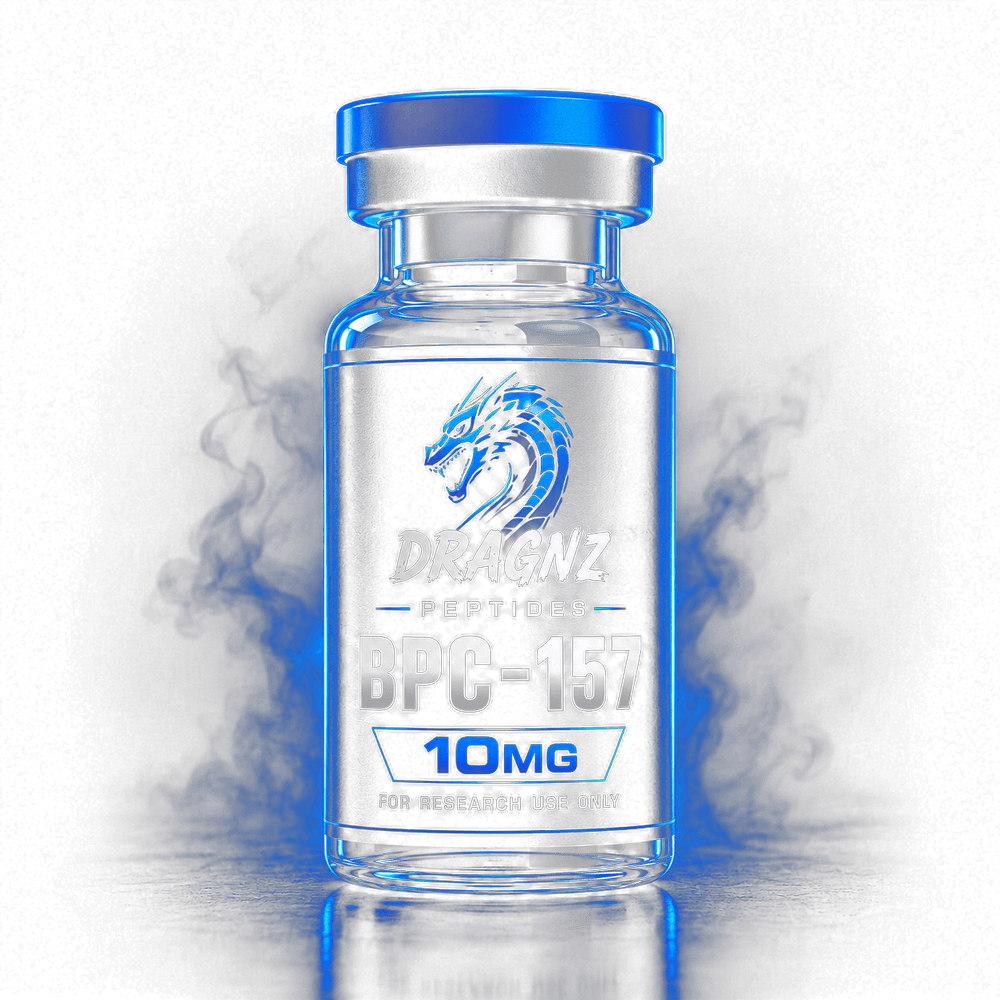
DRGZ-001 · Research Peptide
BPC-157 Research Peptide
Stable gastric pentadecapeptide · 15-AA
- 10 MG
- ≥99% by RP-HPLC
- Lyophilized
- COA on file
For laboratory research use only · Not for human or veterinary use
Overview
A synthetic 15-amino-acid pentadecapeptide (sequence GEPPPGKPADDAGLV), lyophilized to 10 mg per vial. The flagship of the index, released under a numbered batch with a full certificate of analysis.
Specifications
- Catalog
- DRGZ-001
- Net content
- 10 MG
- Form
- White lyophilized powder
- Purity
- ≥99% by RP-HPLC
- Identity
- 1419.6 Da confirmed by ESI-MS
- Shelf life
- Lyophilized: 24+ months at 20°C. Reconstituted: ~28 days at 2-8°C.
- Storage
- Keep sealed, dark, and cold. Store lyophilized vials at 20°C for long-term holding; avoid repeated freeze-thaw once reconstituted.
Research context
BPC-157 is widely used as a reference peptide in in-vitro and preclinical research investigating angiogenesis, fibroblast migration, and tissue-model signaling pathways. Supplied for laboratory characterization and assay development only.
Every batch ships under a numbered certificate of analysis. See the Research-Use Policy for the terms that govern this material.
Further reading: BPC-157: Gastric Pentadecapeptide Research in the DRAGNZ PEPS research library.
Research & handling
General laboratory reference for qualified researchers. Not a protocol for human or veterinary use, and nothing here is a therapeutic claim.
Research background
BPC-157 is a synthetic 15-amino-acid peptide (sequence GEPPPGKPADDAGLV), a partial sequence derived from a protein identified in gastric juice. DRAGNZ PEPS supplies it lyophilized at 10 mg per vial under a numbered batch.
In the published literature it is used as a reference compound in cell- and tissue-model studies of angiogenesis, fibroblast migration, and cytoprotective signaling pathways. It is supplied strictly for in-vitro characterization, assay development, and method validation. No biological effect is claimed or implied.
Reconstitution guide
Lyophilized peptide is brought into solution before use in an assay. A common bench approach for the 10 mg vial:
- Bring the sealed vial to room temperature first, so condensation does not form on the cold cake.
- Wipe the stopper with an alcohol swab, then add your diluent (commonly bacteriostatic or sterile water) slowly down the inside wall of the vial. Do not direct the stream onto the powder.
- Let the cake dissolve undisturbed, then swirl gently. Do not shake or vortex hard, which can shear the peptide.
- Worked example: 2 mL of diluent in a 10 mg vial gives a 5 mg/mL stock (0.5 mg per 0.1 mL). Choose the volume that matches your target working concentration.
- Aliquot to limit freeze-thaw cycles. Hold the working solution at 2-8°C and use it within the window noted on the certificate; freeze long-term aliquots.
BPC-157 reconstitutes to a clear, colorless solution. A cloudy or visibly particulate solution should not be used for quantitative work.
Common questions
- What purity is documented on the certificate?
- Every BPC-157 batch is released at ≥99% by RP-HPLC with identity confirmed by mass spectrometry. Pull the exact figures for your vial from the Verify tool using the batch search code on the label.
- How should the vial be stored?
- Sealed, dark, and cold. Lyophilized material holds 24+ months at 20°C; once reconstituted, refrigerate at 2-8°C and avoid repeated freeze-thaw.
- Is it soluble in water?
- Yes, it is generally water-soluble at the concentrations used for bench work. Use the minimum diluent needed to reach your target stock concentration.
- What is this material sold for?
- Laboratory research use only, by qualified individuals. It is not a drug, supplement, food, or cosmetic, and it is not for human or veterinary use.